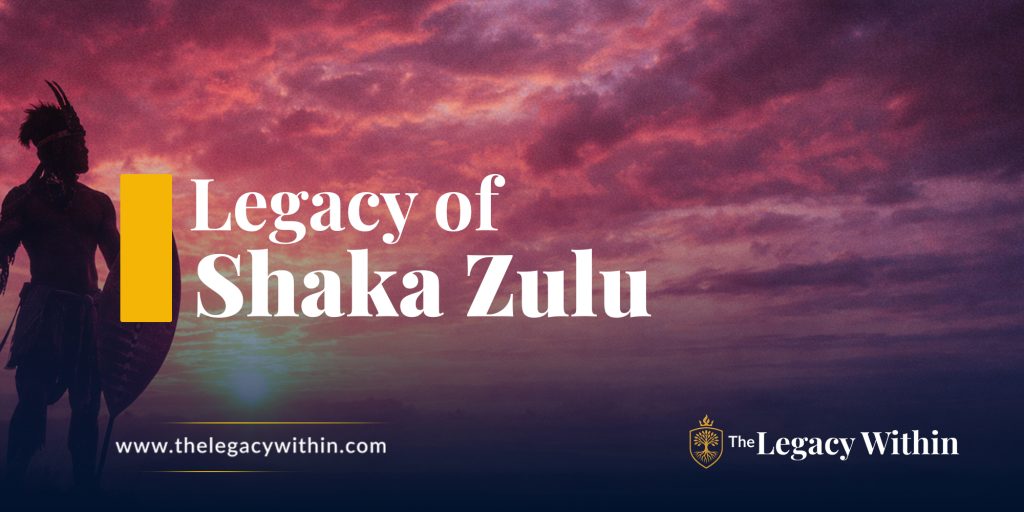
Welcome to another week with Coach T, The Legacy Decoder, bringing you a powerful edition that breathes life into Shaka Zulu’s legacy, layered with symbolism, emotional depth, and a compelling call to action.
A boy was not supposed to rise.
Born of a rejected union, Shaka Zulu was cast out, mocked, marginalised, and made to feel like a mistake. His mother, Nandi, was shamed. His name was spat with contempt. He was not raised in royalty, he was raised in rejection.
But rejection became his forge.
Shaka did not inherit a throne; he carved one from the bones of adversity. He sharpened his pain into a spear, and with it, he reshaped the Zulu kingdom into one of the most formidable forces in African history.
The Legacy of Shaka Zulu
Shaka’s legacy is undeniable. He revolutionised warfare, introducing the short stabbing spear, iklwa, close-combat formations, and rigorous military discipline. He united scattered clans into a powerful nation. His leadership was visionary, strategic, and relentless.
But his legacy is also complex.
His reign was marked by brutality. His grief, especially after his mother’s death, led to violent decrees. Some recall him as a genius. Others as a tyrant. His name evokes both pride and pain.
A truth about legacy: it is not just what you build. It is what you leave behind.
Legacy Is Not Neutral
We often think legacy is automatic. That if we work hard, raise children, or build wealth, we will leave something good behind.
But legacy is not passive. It is not neutral. It is not guaranteed to be positive.
- You can leave behind trauma.
- You can leave behind silence.
- You can leave behind confusion.
Or you can leave behind clarity, courage, and transformation.
Research from Catalyst’s MARC (Men Advocating Real Change) initiative concluded that legacy is not built by winning at all costs, it is built by showing up with integrity, consistency, and care. Research, Critical Studies on Men and Masculinities (CSMM), emphasises this very point and argues that masculinity is historically, culturally, and relationally shaped which opens the door for men to redefine leadership beyond dominance and stoicism.
We Are Not What We Were Given
Shaka Zulu was not given a legacy. He was given shame. He was given exile. He was given nothing.
But he chose to create something.
And so must we.
We can blame our upbringing. We can point to absent fathers, broken homes, or systems that never taught us how to lead. But at some point, we must pick up the spear and write the story ourselves.
Your Legacy Is Your Responsibility
During apartheid and post-independence South Africa, Shaka’s legacy became a rallying symbol of resistance, pride, and cultural unity. Legacy is not just about what you achieve. It is about what you activate in others.
- Will your children inherit your courage or your silence?
- Will your community remember your presence or your absence?
- Will your name echo in healing or in hurt?
You don’t need a kingdom to build legacy. You need intention. You need ritual. You need brotherhood.
Studies in masculinities theory (Connell, 1995) highlight the tension between hegemonic masculinity (dominance-based) and alternative masculinities (compassionate, resistant, generative). They point out that legacy begins when men stop performing and start transforming.
The Legacy Within Invitation
If this stirred something in you, it’s time to act.
Book a session with me, Coach T, The Legacy Decoder, and together we will excavate the story beneath your armour. Let us rewrite the inherited codes. Let us build a legacy that outlives you and outshines titles.
We will use The AMA Framework: Awaken → Master → Ascent to achieve this
- Awaken: Discover who you are beneath the expectations.
- Master: Build rituals, daily alignment, and embodied leadership.
- Ascent: Scale your impact and build a generational legacy.
🔗 Explore The Legacy Within AMA Framework
🎯 Book Your Coaching Journey
Shaka Zulu turned exile into empire. What will you turn your story into?
Let’s build a legacy worth remembering.
Coach T, The Legacy Decoder